25/03/2026
Do Contact Lenses Harm Your Eyes? Risks, Safe Use, and When to Avoid Them
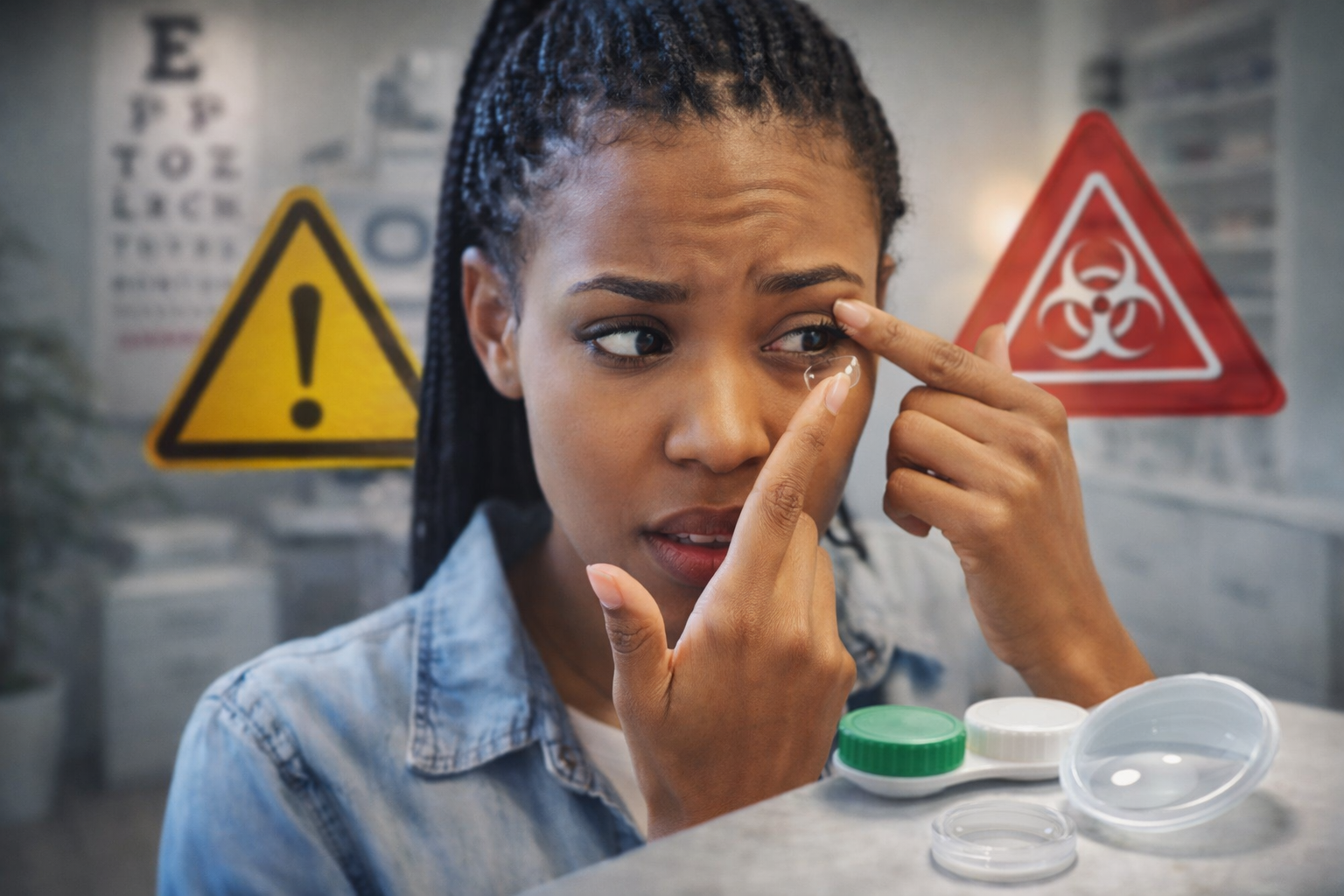
Contact lenses are safely used by millions of people worldwide. Even so, stories about discomfort, infections, and long-term eye damage often raise an important and valid question:
👉 Contact lenses do not harm the eyes when they are properly prescribed and correctly used.
👉 Problems usually occur due to misuse, excessive wear time, poor hygiene, or lack of professional follow-up.
• The real risks of contact lens use
• What is myth vs fact
• Who can safely wear contact lenses
• Who should avoid or use them with caution
• When it’s safe to continue wearing them
• When to stop immediately and see an eye doctor
📌 Key Takeaways (Quick Summary)
✔ Contact lenses are not harmful by themselves
✔ Most risks come from incorrect use
✔ Hygiene and wear time are critical
✔ Not every eye adapts the same way
✔ Knowing when to stop is just as important as knowing how to use them
🧬 Do Contact Lenses Harm Your Eyes? The Honest Answer 
No. Contact lenses do not harm your eyes when they are:
✔ Prescribed by an eye care professional
✔ Properly fitted
✔ Worn within the recommended time
✔ Used with adequate hygiene
Eye problems usually arise when one or more of these factors are ignored.
⚠️ Real Risks of Contact Lens Use 
🦠 H3 — Eye Infections
The risk of infection increases when:
• Hands are not properly washed
• Lenses are worn longer than recommended
• Sleeping with lenses without medical approval
• Poor cleaning of lenses or storage cases
Important:
Infections are uncommon in careful users but can be serious when they occur.
💧 H3 — Dry Eye and Discomfort
Contact lenses may worsen dry eye symptoms, especially in people who:
• Spend many hours on digital screens
• Work in air-conditioned environments
• Wear lenses for long periods without breaks
Dryness is one of the most common reasons people stop wearing contact lenses.
👁️ H3 — Ocular Surface Inflammation
Inflammation may occur when:
• The lens type is not suitable
• Wear time is excessive
• Initial lens fitting was inadequate
This usually improves with lens discontinuation and proper adjustment.
❌ Common Myths About Contact Lenses
❌ “Contact lenses always cause infections”
❌ “They permanently damage the eyes”
❌ “Sleeping with lenses is always safe”
❌ “Anyone can wear contact lenses”
👉 None of these statements are completely true.
📊 Contact Lens Risk Levels 
🟢 H3 — Low Risk
✔ Proper hygiene
✔ Correct wear time
✔ Alternating with glasses
✔ Regular eye checkups
👉 Contact lens use is generally safe.
🟡 H3 — Moderate Risk
✔ Prolonged daily wear
✔ Heavy screen use
✔ Mild dry eye symptoms
✔ Few visual breaks
👉 Requires attention and adjustments.
🔴 H3 — High Risk
❌ Sleeping with lenses without approval
❌ Moderate to severe dry eye
❌ Continuous wear without breaks
❌ History of eye infections
👉 Contact lenses may not be recommended.
✅ When It’s Safe to Continue Wearing Contact Lenses
It’s usually safe to continue wearing lenses if:
✔ There is no pain or redness
✔ Comfort remains good
✔ Vision is clear
✔ Wear time limits are respected
✔ Glasses are used regularly as backup
🚨 When to STOP Using Contact Lenses Immediately
Stop wearing your lenses and seek medical evaluation if you experience:
⚠ Eye pain
⚠ Significant redness
⚠ Persistent gritty or foreign-body sensation
⚠ Blurred vision
⚠ Light sensitivity
These symptoms should never be ignored.
🧼 How to Use Contact Lenses Safely 
🧼 H3 — Proper Hygiene
• Wash and dry hands before handling lenses
• Use only recommended cleaning solutions
• Replace lens cases regularly
⏱️ H3 — Respect Wear Time
• Do not exceed recommended hours
• Do not sleep in lenses unless advised
• Follow replacement schedules strictly
🔄 H3 — Alternate With Glasses
• Allows the eye surface to rest
• Reduces dryness
• Lowers inflammation risk
📊 Contact Lens Types and Risk Differences
Adaptation depends on factors such as:
✔ Tear production
✔ Eye sensitivity
✔ Corneal shape
✔ Daily routine and environment
Difficulty adapting is not a personal failure — it’s an eye characteristic.
🔄 When to Temporarily Switch From Contacts to Glasses
You may need to pause contact lens use:
✔ During dry eye flare-ups
✔ After eye infections
✔ During periods of heavy screen use
✔ When discomfort persists
Temporary switching protects long-term eye health.
🧬 When an Eye Exam Is Essential
You should see an eye doctor if:
✔ You’re using contact lenses for the first time
✔ You’ve had adaptation problems before
✔ You experience frequent burning or redness
✔ You use digital screens for long hours
A proper evaluation prevents complications and improves comfort.
❓ Frequently Asked Questions
Do contact lenses cause long-term eye damage?
No, when used correctly and with follow-up care.
Is sleeping with contact lenses harmful?
In most cases, yes — unless specifically prescribed.
Can children wear contact lenses?
In selected cases, under professional supervision.
✅ Conclusion 
Contact lenses do not harm the eyes when used responsibly. The main risks come from improper use, excessive wear time, and lack of professional guidance.
Do contact lenses harm your eyes?
The honest answer is not simply “yes” or “no.”
👉 Contact lenses do not harm the eyes when they are properly prescribed and correctly used.
👉 Problems usually occur due to misuse, excessive wear time, poor hygiene, or lack of professional follow-up.
In this complete guide, you’ll learn:
• The real risks of contact lens use
• What is myth vs fact
• Who can safely wear contact lenses
• Who should avoid or use them with caution
• When it’s safe to continue wearing them
• When to stop immediately and see an eye doctor
📌 Key Takeaways (Quick Summary)
✔ Contact lenses are not harmful by themselves
✔ Most risks come from incorrect use
✔ Hygiene and wear time are critical
✔ Not every eye adapts the same way
✔ Knowing when to stop is just as important as knowing how to use them
🧬 Do Contact Lenses Harm Your Eyes? The Honest Answer
✔ Prescribed by an eye care professional
✔ Properly fitted
✔ Worn within the recommended time
✔ Used with adequate hygiene
Eye problems usually arise when one or more of these factors are ignored.
⚠️ Real Risks of Contact Lens Use
The risk of infection increases when:
• Hands are not properly washed
• Lenses are worn longer than recommended
• Sleeping with lenses without medical approval
• Poor cleaning of lenses or storage cases
Important:
Infections are uncommon in careful users but can be serious when they occur.
💧 H3 — Dry Eye and Discomfort
Contact lenses may worsen dry eye symptoms, especially in people who:
• Spend many hours on digital screens
• Work in air-conditioned environments
• Wear lenses for long periods without breaks
Dryness is one of the most common reasons people stop wearing contact lenses.
👁️ H3 — Ocular Surface Inflammation
Inflammation may occur when:
• The lens type is not suitable
• Wear time is excessive
• Initial lens fitting was inadequate
This usually improves with lens discontinuation and proper adjustment.
❌ Common Myths About Contact Lenses
❌ “Contact lenses always cause infections”
❌ “They permanently damage the eyes”
❌ “Sleeping with lenses is always safe”
❌ “Anyone can wear contact lenses”
👉 None of these statements are completely true.
📊 Contact Lens Risk Levels
✔ Proper hygiene
✔ Correct wear time
✔ Alternating with glasses
✔ Regular eye checkups
👉 Contact lens use is generally safe.
🟡 H3 — Moderate Risk
✔ Prolonged daily wear
✔ Heavy screen use
✔ Mild dry eye symptoms
✔ Few visual breaks
👉 Requires attention and adjustments.
🔴 H3 — High Risk
❌ Sleeping with lenses without approval
❌ Moderate to severe dry eye
❌ Continuous wear without breaks
❌ History of eye infections
👉 Contact lenses may not be recommended.
✅ When It’s Safe to Continue Wearing Contact Lenses
It’s usually safe to continue wearing lenses if:
✔ There is no pain or redness
✔ Comfort remains good
✔ Vision is clear
✔ Wear time limits are respected
✔ Glasses are used regularly as backup
🚨 When to STOP Using Contact Lenses Immediately
Stop wearing your lenses and seek medical evaluation if you experience:
⚠ Eye pain
⚠ Significant redness
⚠ Persistent gritty or foreign-body sensation
⚠ Blurred vision
⚠ Light sensitivity
These symptoms should never be ignored.
🧼 How to Use Contact Lenses Safely
• Wash and dry hands before handling lenses
• Use only recommended cleaning solutions
• Replace lens cases regularly
⏱️ H3 — Respect Wear Time
• Do not exceed recommended hours
• Do not sleep in lenses unless advised
• Follow replacement schedules strictly
🔄 H3 — Alternate With Glasses
• Allows the eye surface to rest
• Reduces dryness
• Lowers inflammation risk
📊 Contact Lens Types and Risk Differences
| Lens Type | Relative Risk |
| Daily disposable lenses | Lower |
| Monthly lenses | Moderate |
| Rigid gas-permeable lenses | Variable (require adaptation) |
Risk depends more on proper use than lens type.
Adaptation depends on factors such as:
✔ Tear production
✔ Eye sensitivity
✔ Corneal shape
✔ Daily routine and environment
Difficulty adapting is not a personal failure — it’s an eye characteristic.
🔄 When to Temporarily Switch From Contacts to Glasses
You may need to pause contact lens use:
✔ During dry eye flare-ups
✔ After eye infections
✔ During periods of heavy screen use
✔ When discomfort persists
Temporary switching protects long-term eye health.
🧬 When an Eye Exam Is Essential
You should see an eye doctor if:
✔ You’re using contact lenses for the first time
✔ You’ve had adaptation problems before
✔ You experience frequent burning or redness
✔ You use digital screens for long hours
A proper evaluation prevents complications and improves comfort.
❓ Frequently Asked Questions
Do contact lenses cause long-term eye damage?
No, when used correctly and with follow-up care.
Is sleeping with contact lenses harmful?
In most cases, yes — unless specifically prescribed.
Can children wear contact lenses?
In selected cases, under professional supervision.
✅ Conclusion
Knowing when to use, when to pause, and when to seek help is the key to safe and comfortable long-term contact lens wear.
📚 Scientific References:
📚 Scientific References: